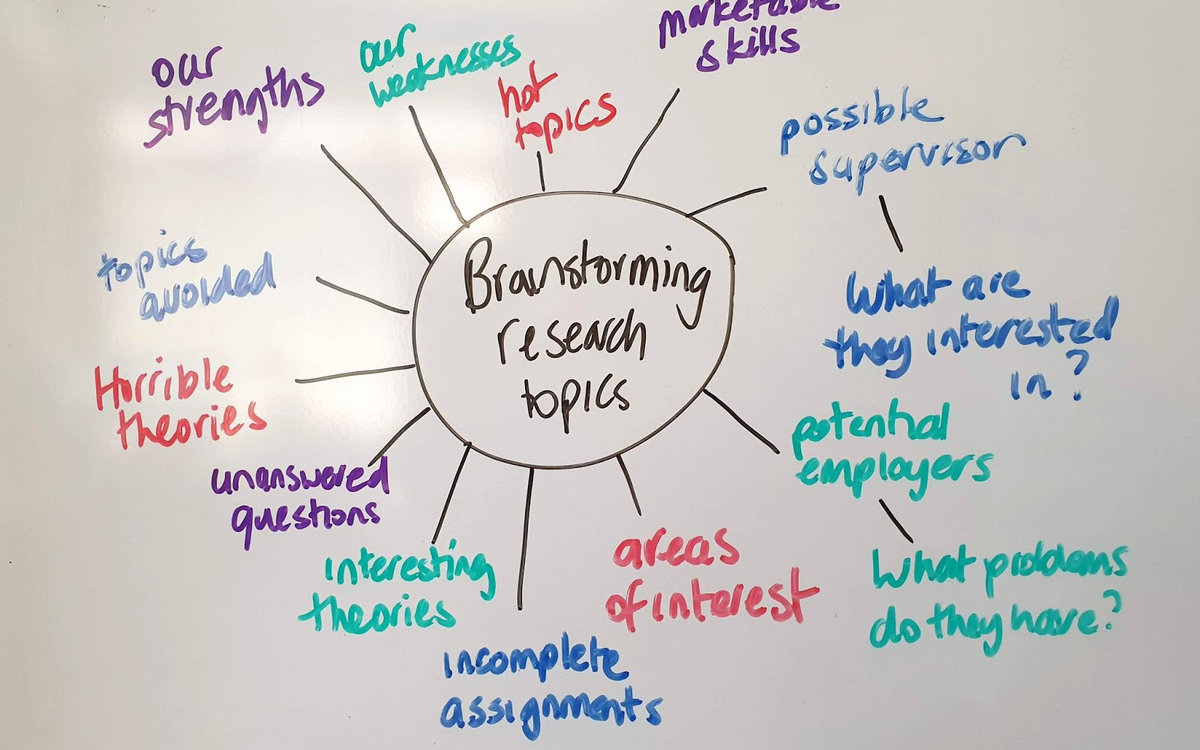
Now, creating goals is the easier part. How do you actually make these goals a reality? Here's each step you need to do to succeed in research. Whether your goal is winning 1st place at ISEF or competing at the regional level, there are some steps that are needed for every project.
Step 1 · Getting help
Completing an entire project by yourself and doing the statistical analysis is challenging. Unless you're already familiar with these topics and data science tools, it becomes very hard to complete a project on your own. Seeking help is your best strategy. This means finding a mentor who can help guide you through the research process and teach you to do research yourself. This can also mean finding other students who have competed in science fairs and conducted research. Our resources on this website have plenty of introductory material on research and the science fair process.
Here are some useful resources:
Regardless, seeking out a mentor is the number one step you can take toward creating a project. Before you seek out a mentor, be sure to think about several things.
1. Type of research
Do you want to do a lab-based project or a computational project? This will determine whether location matters for your project. Keep in mind that lab-based research projects are typically more time-intensive: consider the time it takes to commute, set up in the lab, and actually work on the project. You'll probably be doing research during the school year, which makes it extremely challenging to balance everything.
Computational projects also require a lot of time — coding, creating datasets, and so on — so both are time-consuming, and you have to determine which type of research is best suited to your skills and time availability. If you have some decent coding experience already and less time, a computational project is probably a better idea. And if you do a computational project, you're not limited by location, so you can seek a mentor from anywhere in the world, which can be a huge plus.
2. Brainstorm ideas and become an expert
You don't want to simply email professors without an idea of what they're working on or what project you want to do. That's a waste of your time and theirs. Instead, deeply research the topic you want to study. This fundamentally means reading papers and understanding the key concepts and problem. Look at the professor's work and have questions to ask. This way, when you ask these mentors for help, they're more willing to give it. Make sure this is a topic you actually want to go deeper into. Exhibit passion!
You do not want to work on a project you're not interested in and are simply doing to have a project. You won't be happy. Having passion for your topic will also motivate you to understand the issue much better than if you're doing the bare minimum. These professors are happy to talk with people about their work, especially when those people understand the topic well. But even if you can't get a good grasp on their project, still shoot an email. Research is tough for a reason, and if you've already tried your best, it's still better to find a mentor who can help you with the process than to struggle alone.
Additional resource:
Step 2 · Summer research programs
Getting a mentor is one way to enter the research field and gain critical help, but it's not the only way. Finding a research program to attend can be a great way to start research, and it also lets you find a mentor from the program to work with long term, even after the program has ended.
How do you find a program?
The web is your best friend here, so scour the internet for different programs. Reddit often has good advice (no joke), and previous attendees can tell you what went well or poorly. You can find people who have attended programs through Discord servers, personal connections, LinkedIn, and more.
In addition, the Unity Network has a ton of research program reviews listed on our website, including personal insights into RSI, BU RISE, SSP, and more! Check them out on our research program reviews page, which is also separated by region of the U.S. Do a thorough job researching programs and ultimately compile a list of those you believe best fit you based on scientific interest, cost, and other factors we cover below.
Here's a step-by-step process for selecting programs by looking at the critical factors.
1. Location
Programs are located all across the world (we'll focus on the U.S.), mostly on the East and West coasts in large cities with strong research institutions, like Boston, New York, and across California. Most of the time, local colleges are open to high schoolers conducting research, so check those out too. Find options that are close to you, and consider whether you're able to travel far, live away from home for an extended period (1–2 months), and cover the costs that come with it.
2. Prestige
If you're not heavily constrained by cost and location, the most important consideration is of course prestige. Attending a top research program like the Research Science Institute (RSI) or the Summer Science Program (SSP) is a great way not only to find an excellent mentor but also to show colleges that you're in the upper echelons of candidates who do research. RSI usually accepts 60–80 people from over 2,000 applications, making it harder to get into than some Ivy League schools. SSP boasts roughly a 10% acceptance rate, and other competitive programs are around 5–20%.
3. Costs
No matter how good a program is or how far it is, you have to consider costs — and paying less is of course better. RSI is great because it's not only commonly agreed to be the best research program but also completely free. Yep: RSI covers all expenses. Other programs are much more expensive; SSP, for example, costs around $4,000–8,000 depending on your financial aid. Other top programs will probably also cost in the thousands. Going to a more local program or researching at a local university will be much cheaper and could still offer the same or even greater benefits.
There are other, smaller factors to consider, like how long a program is, what science research they offer, and how engaged the mentors are with students. But at the end of the day, remember to weigh your options. Going to a prestigious program might be worth it even if it costs thousands of dollars, but it's not the only option. Plenty of students conduct research at their local universities and go on to achieve great things, like publishing in journals and qualifying for ISEF and the Regeneron STS competition. It's up to you to weigh these factors and decide whether you should go.
 The Unity Network